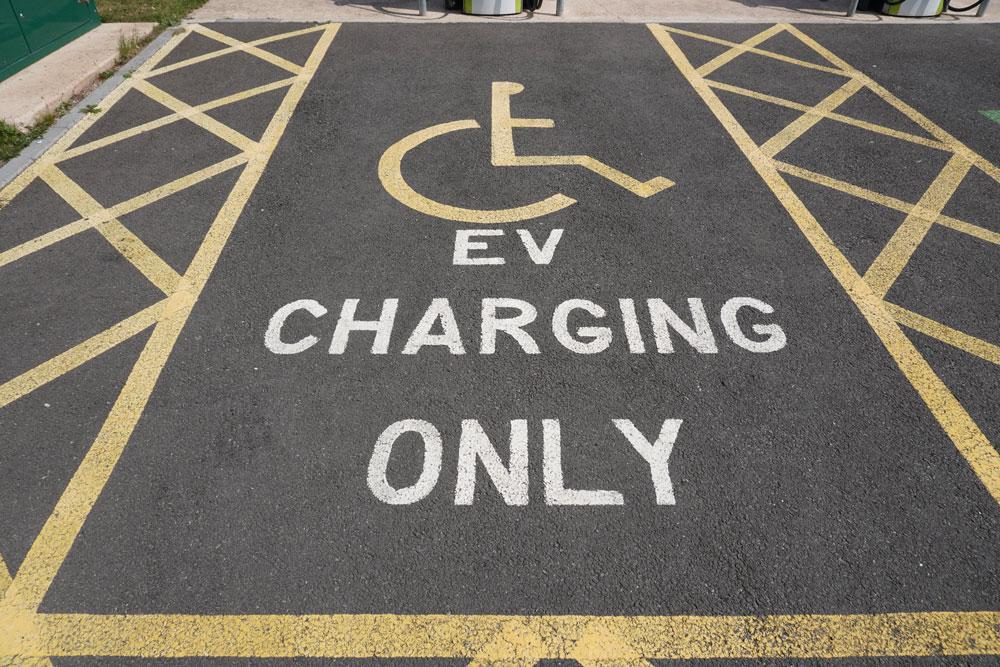
Local authorities have called for clearer guidance and faster action to ensure the EV charging network is accessible to all drivers.
EV charge point operator Believ’s latest Local Authority Insight Report has revealed that councils are struggling to deliver inclusive infrastructure in constrained spaces.
53 per cent of councils say balancing the need for accessible charge points with local space constraints is problematic, with narrow streets, limited street width and competing resident requirements making it difficult to deliver charging that works for everyone. In London, the figure is 90 per cent.
The report also shows that councils want support for implementation. 42 per cent of national and 60 per cent of London local authorities want additional guidance from central government on how to deliver accessible charging in their areas.
60 per cent of UK councils have already or are currently working on an accessibility, while 4 per cent are not considering disabled access for EV charging yet, and 37 per cent of those responsible for EV charging infrastructure are not sure whether their networks are working to an accessibility plan.
PAS 1899, a voluntary best-practice specification designed to improve the accessibility of public charging for those with diverse accessibility needs, was introduced in 2022. This included minimum requirements for space, layout and ease of use.
Believe CEO Guy Bartlett said: “Some local authorities are working hard to expand accessible charging provision, but many are facing real-world constraints, particularly where streets are narrow and space is limited. Our research shows that local authorities are currently unclear on best practice – this needs to change. While the solutions are not always straight-forward, they are available. So, the answer is not to compromise on inclusion, but to provide the guidance and support councils need to implement accessibility confidently and consistently.”